Test cricket has been the benchmark of the sport since the first official match in 1877 & it still defines how players, teams, and analysts measure quality in modern cricket. Moreover, the format runs for up to five days, with two innings per side and no limit on overs, which places equal demand on skill, fitness & strategy. At Parimatch, we publish clear and accurate cricket guides so that you can follow every session with a sound understanding of the game. This article simply explains the rules, match flow, terminology, results, tactics & statistics that shape Test cricket today.
Test Cricket Explained: The Format in Brief
Test cricket is the oldest international format and the most demanding. The first official Test took place in Melbourne in 1877 between Australia and England, and the International Cricket Council (ICC) governs the format today. Parimatch presents the essential facts below as a quick reference:
- Duration: up to five days, with at least 90 overs scheduled each day
- Innings: two for each team
- Overs: no limit per innings
- Ball: red ball, with a pink ball used in day and night Tests
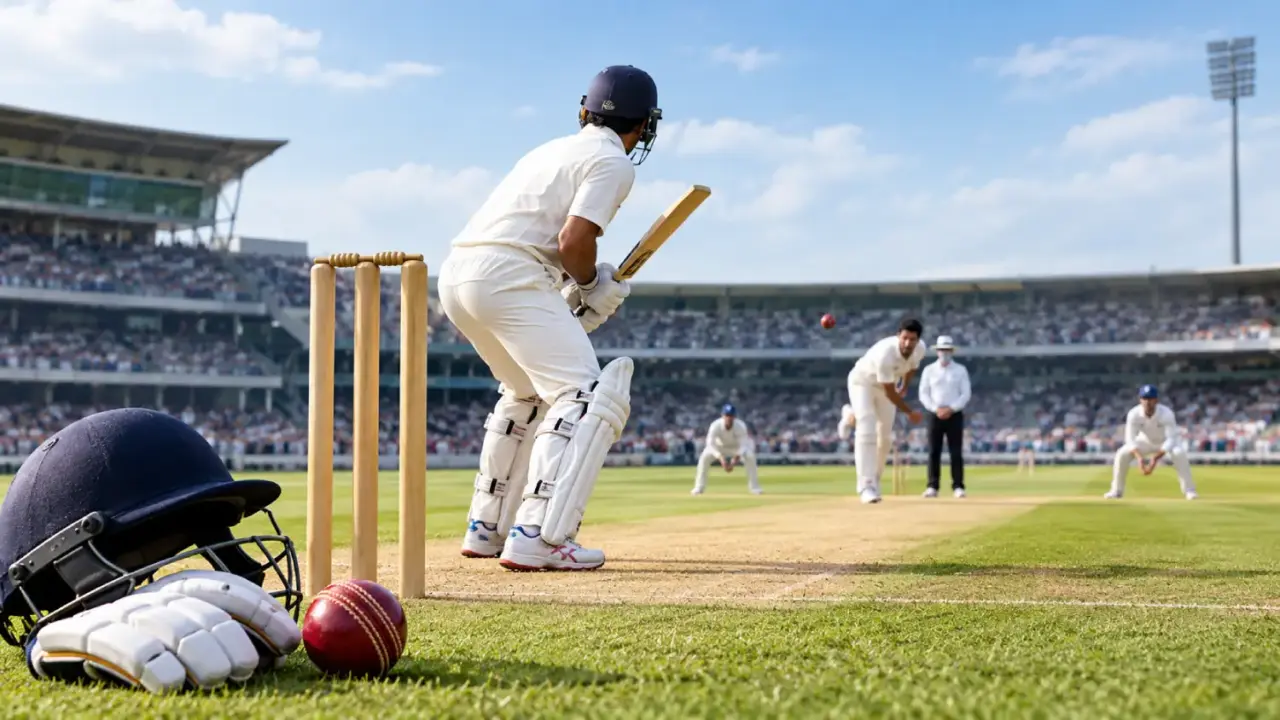
- Dress: traditional whites
Because overs are unlimited, teams must manage time, workload and conditions rather than a scoring rate. This is the main reason the format is regarded as the most complete assessment of a cricketer.
How Test Cricket Works: Match Flow from Toss to Result
Understanding how Test cricket works is straightforward once you follow the sequence of a match. Parimatch breaks it into the stages below.
- Toss: the winning captain chooses to bat or bowl, which is based on the pitch & even on the weather.
- Sessions: each day has three sessions, which are generally separated by lunch & tea.
- Innings order: teams bat in turn, so each side simply receives two innings unless a follow-on is enforced.
- Declaration: a captain may close an innings early to create time to dismiss the opposition.
- Follow-on: if a side trails by 200 runs or more in a five-day Test, the leading captain may require them to bat again immediately.
- DRS: teams may review certain umpire decisions by using ball tracking & replay technology.
You can consider a simple example. Team A scores 350 & Team B replies with 280, which gives Team A a lead of 70 runs. Team A then bats again to set a target while preserving enough time to bowl Team B out. This balance between runs and time is central to the format, and it is the reason a single session can change the direction of a match.
Test Cricket in Cricket: Rules and Terminology You Need to Know
These terms appear in almost every Test broadcast. The Parimatch glossary below supports your knowledge of cricket rules and cricket terminology.
- Session: a block of play between scheduled breaks
- Declaration: a captain ending their own innings early
- Draw: a result when time runs out before a winner is decided
- Nightwatchman: a lower order batter sent in late in the day to protect a key batter
- Maiden over: an over in which the bowler concedes no runs
- LBW: leg before wicket, a dismissal when the ball strikes the batter’s pad in line with the stumps
- New ball: a fresh ball that the fielding captain may take after 80 overs
How Test Matches End: Win, Draw or Tie
A Test match can conclude in four ways:
- Win by runs: a team scores more runs overall and dismisses the opposition in their final innings.
- Win by wickets: the team batting last reaches the target.
- Draw: time expires before a result is reached.
- Tie: both teams finish with equal runs once all innings are complete. This is extremely rare.
A draw is not a failure of the format. A side that bats through the final day to save a match demonstrates discipline and technical skill. Results also feed into the ICC World Test Championship, which gives each series additional significance in modern cricket.
Test Cricket Tactics: Match Analysis & Player Performance
Sound match analysis begins with an understanding of how teams plan across five days. Parimatch highlights four areas.
- Bowling plans: bowlers use the new ball in order to extract swing & seam, then rely on patience, tight lines and attacking field settings.
- Batting approach: batters build innings across sessions, leave good deliveries & score when bowlers err.
- Pitch reading: surfaces deteriorate over time, with pace and bounce early and turn & uneven bounce later.
- Team balance: captains select extra pace bowlers or spinners according to conditions.
A well-documented example is the 2001 Test in Kolkata. India followed on after trailing Australia by 274 runs. VVS Laxman scored 281 & Rahul Dravid scored 180, and India won by 171 runs. Innings of this kind show how player performance sustained across several sessions can reverse the course of a match.
Read More Blog : India vs West Indies 1st ODI
Key Test Cricket Stats & What They Tell You
Sports statistics provide context for what you observe on the field. Moreover, Parimatch recommends focusing on these measures, which are discussed below:
- Batting average: runs scored are divided by dismissals. In this, a high figure over many Tests simply indicates consistency.
- Bowling average: runs conceded per wicket taken. However, a lower figure is considered better.
- Strike rate: for bowlers, balls bowled per wicket. For batters, runs which are being scored per 100 balls.
- Centuries & five-wicket hauls: milestones that mark match-defining performances.
In addition, career records can be verified through ESPNcricinfo & the ICC website.
How This Guide Helps You Follow Test Cricket with Parimatch
Parimatch aims to give you reliable cricket knowledge that supports your enjoyment of the game.
- A clear grasp of sessions, pitch conditions & statistics gives you stronger context when you follow matches on Parimatch.
- Accurate terminology helps you understand commentary and analysis during long Tests.
- This content is intended for readers aged 18 and above. Please follow the regulations of your region and keep your activity responsible.
[ Log In Our Website ]
Conclusion
In the above blog, we have discussed that Test cricket rewards patience, planning & technical skill, which is why it remains the most respected format in the sport. You now understand the structure, match flow, key terms, possible results & the statistics that matter. Therefore, you should apply this knowledge the next time you watch a Test & simply explore further cricket guides from Parimatch.