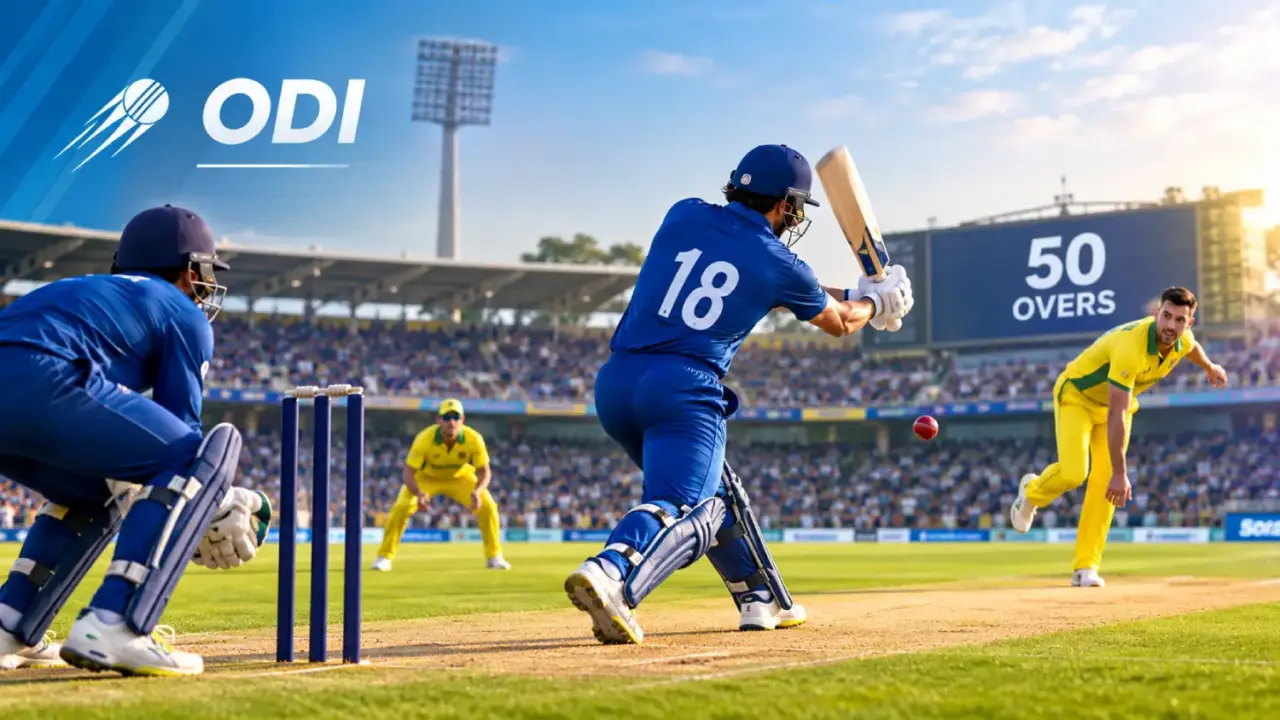
Few formats test planning as thoroughly as ODI cricket, where a single poor session can undo hours of disciplined play. Each side bats once for a maximum of 50 overs, and the higher total wins the match. At Parimatch, we want you to follow the game with real understanding, so this guide covers the cricket rules, tactics and statistics that define the format. Whether you are new to the sport or you want sharper match analysis, the sections below give you clear context based on official ICC playing conditions and well documented records.
ODI Cricket Explained: The Core Format in Simple Terms
ODI cricket explained starts with its history. The first One Day International took place on 5 January 1971 at the Melbourne Cricket Ground, where Australia met England. Soon after, the format gained global standing through the first Cricket World Cup in 1975. Today, you will find it firmly placed in the international calendar, and Parimatch treats it as a core format for fans who want depth.
Before you move on, keep these essentials in mind:
- Teams: 11 players per side
- Innings: one per team, with a maximum of 50 overs
- Bowling limit: no more than 10 overs per bowler
- Possible results: win, tie or no result
- Common terms: target, run chase, powerplay and required run rate
Once you know this cricket terminology, every scorecard and commentary segment becomes easier to follow.
How ODI Cricket Works: Rules Every Fan Should Know
To understand how ODI cricket works, you should first look at the three powerplay phases. They control where fielders may stand, and as a result, they shape the pace of the innings.
- Overs 1 to 10: only two fielders may stand outside the 30 yard circle
- Overs 11 to 40: up to four fielders may stand outside the circle
- Overs 41 to 50: up to five fielders may stand outside the circle
In addition, several other rules affect how a match unfolds:
- Wides and no balls: each adds a run to the total, and a front foot no ball gives the batter a free hit on the next delivery
- DLS method: when rain interrupts play, the Duckworth Lewis Stern method sets a revised target, and each side generally needs to face at least 20 overs for a result
- Ball usage: the ICC has revised its regulations on balls used per innings in recent years, so you should check the current playing conditions for any series you follow
Parimatch publishes format guides, which means you can keep up with such changes without searching across several sources.
ODI Cricket in Cricket: Where It Fits Among the Three Formats
ODI cricket in cricket’s wider structure works as the balanced format. You see batters with enough time to build an innings, yet bowlers still face constant pressure to take wickets.
| Feature | ODI | T20 | Test |
| Overs per innings | 50 | 20 | Unlimited |
| Innings per team | 1 | 1 | 2 |
| Typical duration | 7 to 8 hours | About 3 hours | Up to 5 days |
| Main skill | Patience and power | Power hitting | Endurance and technique |
Moreover, major ICC events such as the Cricket World Cup and the Champions Trophy use this format, alongside regular bilateral series. Therefore, you always have fixtures to study, and Parimatch helps you place each one in context.
ODI Cricket Tactics: How Teams Plan Each Phase
Every ODI innings moves through three distinct stages, and successful teams prepare for each one in advance.
- Overs 1 to 10: openers respect the new ball while bowlers search for swing and early wickets. Usually, most of the teams prefer a stable platform over rapid scoring.
- Overs 11 to 40: spinners & middle order batters take control. Here, rotating the strike and building partnerships even matter more than hitting boundaries.
- Overs 41 to 50: finishers attack, while bowlers rely on yorkers & slower deliveries to limit the damage.
Furthermore, setting and chasing influence strategy in different ways. The team batting first aims for a total suited to the pitch, whereas the chasing side tracks the required run rate over by over. Evening dew can also favour chasing teams, which is why you will often see the toss carry real weight at certain venues.
Consequently, sound match analysis weighs these factors together instead of relying on one statistic. The Parimatch cricket guides follow the same approach, so you can connect format knowledge with the conditions that shape each game.
Player Performance and Sports Statistics in ODI Cricket
Numbers tell the story of a match, provided you know which ones deserve your attention.
- Batting average: runs scored divided by the number of dismissals
- Strike rate: runs scored per 100 balls faced
- Economy rate: runs conceded per over bowled
- Bowling average: runs conceded per wicket taken
However, context is essential when you assess player performance. A strike rate of 90 means something different on a flat batting surface than on a pitch that offers seam movement. Therefore, you should always weigh venue records, recent form and opposition quality together.
Similarly, milestones show how the format has evolved. Moreover, Rohit Sharma’s 264 against Sri Lanka in 2014 remains the highest individual ODI score & England’s 498 for 4 against the Netherlands in 2022 is the highest team total. Since records can change, therefore you should verify the latest figures on the ICC website or ESPNcricinfo before you simply quote them. In addition, Parimatch encourages you to simply rely on these official sources for sports statistics.
Read More Blog: Parimatch Live Cricket
How Parimatch Helps You Follow ODI Cricket
Parimatch supports you before and during a match with practical information. On parimatch.city, you can explore:
- Match information and context for upcoming ODI fixtures
- Statistics and format guides that explain key terms and rules
- Clear explanations of match phases, tactics and player roles
As a result, you can read match situations with greater confidence. Please note that features may vary by region. This content is intended for readers aged 18 and above, so you should check the laws in your area and play responsibly.
[ Log In Our Website ]
Conclusion
ODI cricket rewards teams that manage three phases well: a careful start, a controlled middle and a decisive finish. Once you understand the rules, tactics & sports statistics behind each phase, you can simply follow and analyse every match with more confidence. To continue, you can even explore more cricket guides, format explainers and match insights at parimatch.city & keep building your knowledge of the game with Parimatch.