
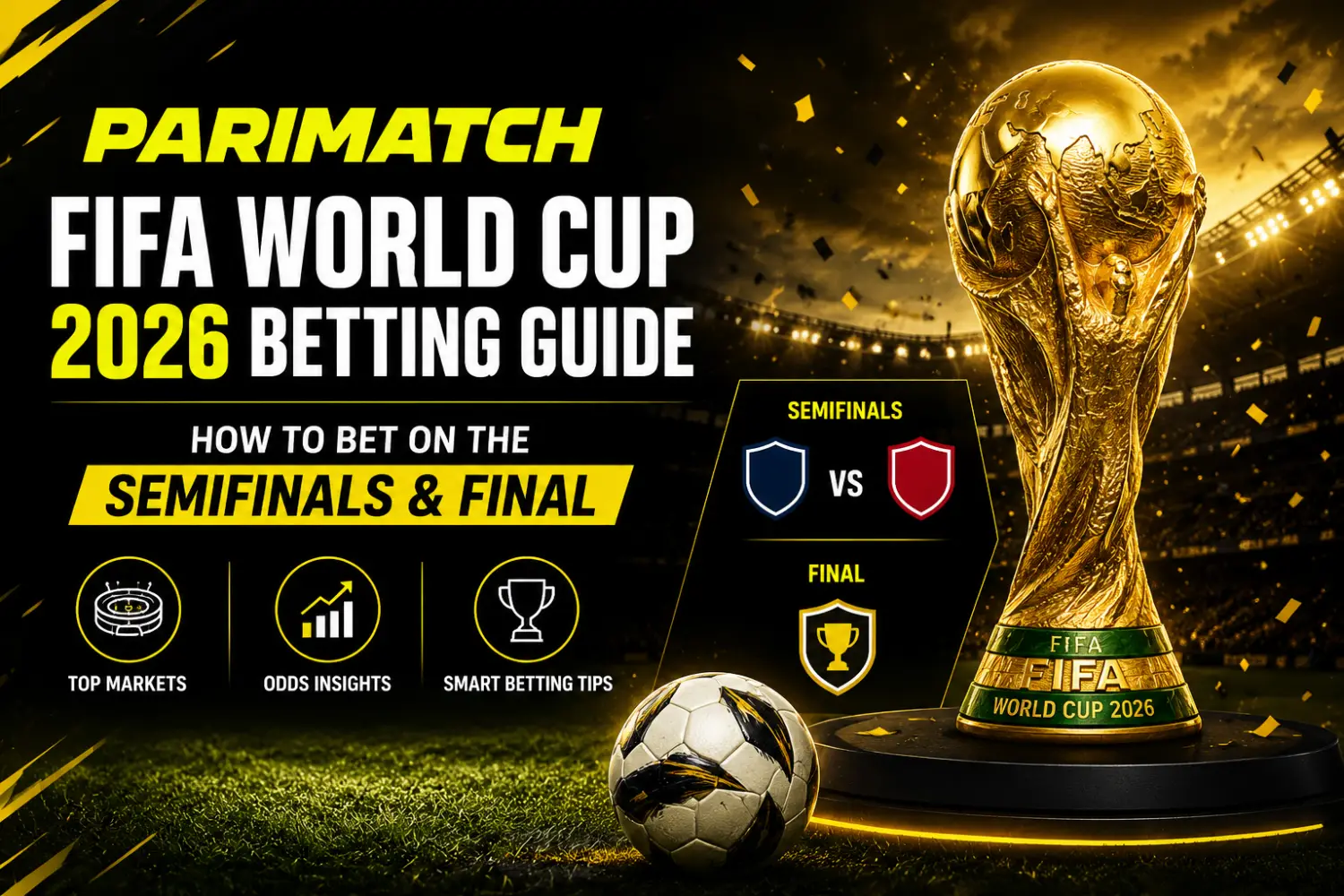
The FIFA World Cup 2026 has reached its climax, and for bettors, this is the most exciting week of the entire tournament. Only four teams remain — France, Spain, England, and defending champions Argentina — and the final will be played on 19 July at the New York New Jersey Stadium. If you’re planning to bet on the World Cup semifinals or the final, this guide walks you through the key markets, how the remaining teams stack up, and how to bet responsibly on football’s biggest stage.
Where the Tournament Stands Right Now
For the first time in World Cup history, the top four teams in the FIFA rankings have all reached the semifinals. Here’s the schedule for the business end of the tournament:
Semifinal 1: France vs Spain — Tuesday, 14 July, Dallas
Semifinal 2: England vs Argentina — Wednesday, 15 July, Atlanta
Third-place match — Saturday, 18 July, Miami Final — Sunday, 19 July, New York New Jersey Stadium
Each team arrived here differently. France have looked the most complete side of the tournament, with Kylian Mbappé reaching the semifinals for the third World Cup in a row. Spain, the reigning European champions, ground past Belgium thanks to another late Mikel Merino winner. England beat Norway to reach their first semifinal since 2018, powered by Jude Bellingham. And Argentina — chasing back-to-back titles — survived an extra-time thriller against Switzerland after Julián Álvarez and Lautaro Martínez struck late.
Key World Cup Betting Markets Explained
If you’re new to football betting, here are the markets that matter most in knockout football:
1. Match Result (1X2)
The simplest market: home win, draw, or away win. Important for knockout games: the 1X2 market usually settles on the result after 90 minutes. If France vs Spain goes to extra time, a “draw” bet wins even if one team lifts the trophy on penalties later. Always check how your bookmaker settles knockout matches.
2. To Qualify / To Lift the Trophy
This market covers which team progresses to the next round, regardless of whether it takes 90 minutes, extra time, or a penalty shootout. In tight semifinals between evenly matched teams, many bettors prefer “to qualify” over 1X2 because it removes the draw variable.
3. Outright Winner
A bet on which team wins the whole tournament. With four teams left, the odds are much shorter than they were in June, but there’s still value if you have a strong read. France are widely rated favourites, with Argentina carrying the longest odds of the four despite being the holders — largely because they’ve needed dramatic escapes in three consecutive knockout rounds.
4. Goalscorer Markets
Anytime goalscorer, first goalscorer, and tournament top scorer (Golden Boot) markets are hugely popular in the knockout rounds. Players like Mbappé, Bellingham, Lamine Yamal, and Álvarez dominate these markets — but remember that first-goalscorer bets are high-variance by nature.
5. Totals (Over/Under Goals)
A bet on the combined number of goals. Knockout football tends to be cautious — semifinals historically produce fewer goals than group games because the stakes punish mistakes. Under 2.5 goals is often the statistically favoured side in semifinals, though this tournament’s quarterfinals (France 2-0, Spain 2-1, England 2-1, Argentina 3-1) all landed near or above that line.
6. Both Teams to Score (BTTS)
Will both sides find the net? With attacking talent like Mbappé, Yamal, Bellingham, and Messi’s Argentina on the pitch, BTTS markets attract heavy volume — but Spain’s defence conceded for the first time all tournament only in the quarterfinal, which is worth factoring in.
How to Analyse the Semifinals Like a Sharp Bettor
Anyone can pick a favourite. Better betting decisions come from process:
Look at underlying form, not just results. Argentina have won every knockout game, but they’ve trailed or been level deep into matches repeatedly. Results flatter them; performances suggest vulnerability. France, by contrast, have controlled games from start to finish.
Weigh squad news and rotation. Semifinals come after a punishing month. Check confirmed lineups before kick-off — a rested fullback or a suspended midfielder can swing a match more than the market adjusts for.
Respect tournament context. Spain lost the Euro 2024 final and have revenge-level motivation. England haven’t won a World Cup since 1966 and historically tighten up in semifinals. These narratives don’t decide matches, but they influence how teams approach them.
Shop the market early and late. Odds move as team news drops and public money floods in on big names. If you like an underdog, earlier is usually better; if you like the favourite, waiting for lineup confirmation can protect you.
Betting on the Final: What to Consider
The final on 19 July will be the single most-bet football match of the year. A few things to keep in mind:
- Finals are usually tighter than semifinals. Four of the last six World Cup finals went to extra time or were decided by a single goal. Markets like “to lift the trophy,” under-goals lines, and draw-at-90-minutes often carry more value than they appear to.
- Emotional betting spikes around finals. The temptation to back the “story” — Messi’s farewell, England ending 60 years of hurt, Mbappé’s coronation — is enormous. Stories don’t score goals. Bet the matchup, not the narrative.
- Live betting comes into its own. In-play markets during a final let you react to how the game actually unfolds rather than pre-match assumptions. Just set a budget before kick-off, not during it.
Bankroll Management: The Skill That Outlasts Any Tournament
The single biggest difference between recreational bettors who enjoy the World Cup and those who regret it is bankroll discipline:
- Set a fixed tournament budget — an amount you can lose entirely without it affecting your life.
- Stake 1–5% of your bankroll per bet. No single match, not even the final, deserves your whole budget.
- Never chase losses. A losing semifinal bet doesn’t need to be “won back” on the final.
- Keep a record. Tracking your bets exposes patterns — most casual bettors overestimate how often they win.
Read More: How to Bet on the FIFA World Cup: Markets & Value Tips
Responsible Gambling: Read This Before You Bet
Betting on the World Cup should be entertainment, never a way to make money or solve financial problems. Please keep the following in mind:
- Only bet what you can comfortably afford to lose.
- Set deposit limits and time limits before the semifinals, not after a loss.
- If betting stops being fun, stops feeling like a choice, or starts affecting your relationships, finances, or mood — stop and seek support.
- Use self-exclusion tools if you need a break.
- Online betting laws vary significantly across regions, including from state to state in India. Always confirm that online sports betting is legal where you live before placing any bet, and only use licensed operators.
- You must be of legal gambling age in your jurisdiction to bet.
If you or someone you know is struggling with gambling, reach out to a local problem-gambling helpline or support organisation in your region.
Frequently Asked Questions
When is the World Cup 2026 final?
The final is on Sunday, 19 July 2026, at the New York New Jersey Stadium (MetLife Stadium) in East Rutherford, New Jersey. The third-place match takes place a day earlier, on 18 July, in Miami.
Which teams are in the World Cup 2026 semifinals?
France vs Spain (14 July, Dallas) and England vs Argentina (15 July, Atlanta). This is the first time in World Cup history that the top four ranked teams in the world have all reached the semifinals together.
Who is the favourite to win the World Cup 2026?
France are widely rated the favourites, having been the most consistently dominant side of the tournament. Spain and England sit close behind, while defending champions Argentina carry the longest odds of the four after needing late escapes in three straight knockout rounds. Favourites are not certainties — semifinal upsets are common in World Cup history.
Do 1X2 bets include extra time?
Usually not. Most bookmakers settle match-result (1X2) bets on 90 minutes plus stoppage time only. If a semifinal or final goes to extra time, a “draw” bet typically wins. Use “to qualify” or “to lift the trophy” markets if you want extra time and penalties included. Always confirm your bookmaker’s settlement rules before betting.
What is the safest World Cup betting market for beginners?
No market is truly “safe,” but match result (1X2) and “to qualify” are the easiest to understand and analyse. Avoid exotic markets like first goalscorer or exact scoreline until you’re comfortable with how odds and probability work — these are high-variance bets even for experienced punters.
Is it better to bet pre-match or live during the World Cup?
Neither is inherently better. Pre-match betting rewards preparation and research; live betting rewards reading the game as it unfolds, which is especially valuable in tight knockout matches. Whichever you choose, set your budget before kick-off — never mid-match.
Can I bet on the World Cup Golden Boot and other tournament awards?
Yes. Most bookmakers offer outright markets on the Golden Boot (top scorer), Golden Ball (best player), and even Golden Glove (best goalkeeper). With only four teams left, these markets have narrowed sharply — a player in the final has two matches left to score, while eliminated players’ totals are locked. Check whether third-place match goals count toward settlement, as rules vary.
How much should I stake on the World Cup final?
Stick to your normal staking plan — ideally 1–5% of your bankroll — no matter how big the occasion feels. The final is one match, not a guaranteed outcome, and increasing stakes for “special” games is one of the most common ways bettors lose discipline.
This article is for informational and entertainment purposes only and does not constitute betting advice. Odds and match details change quickly — always verify with official sources before betting. Gamble responsibly. 18+ (or legal age in your jurisdiction).